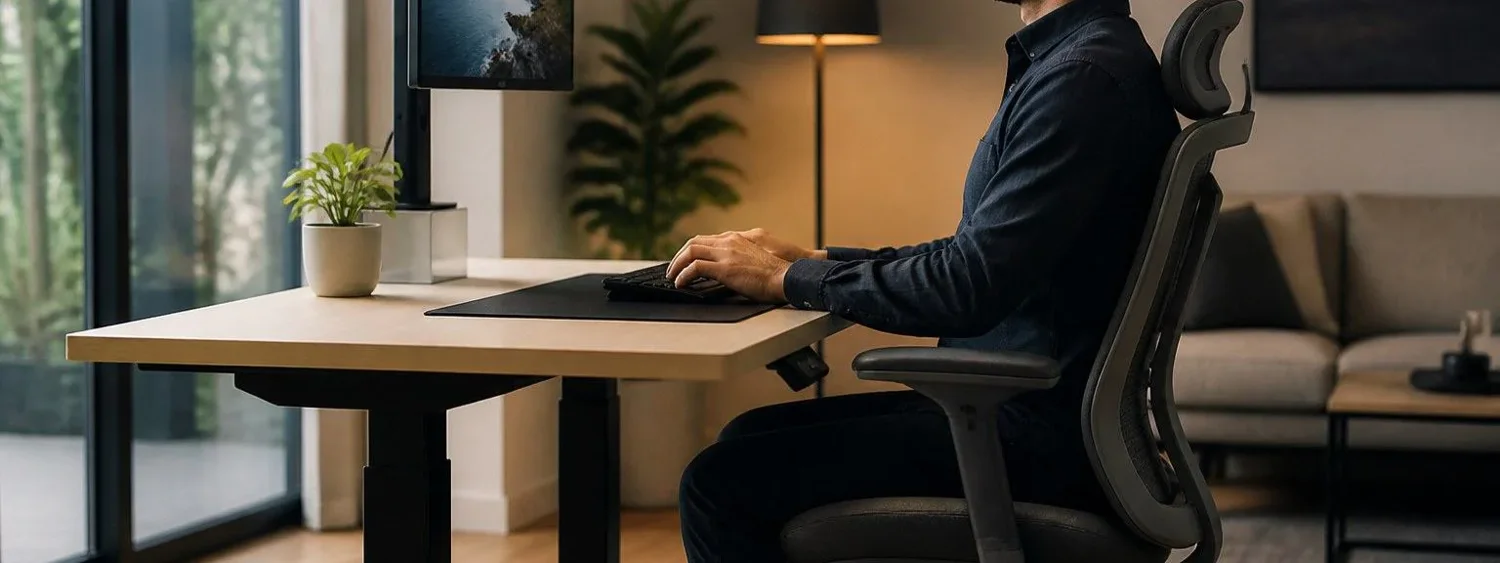
This support page focuses on lumbar support, posture fit, and lower-back relief for ergonomic office chairs. Product comparisons belong on 7 Best Ergonomic Office Chairs for Back Pain Relief. Previous cloud article: locked diary journals.
Lumbar Support, Posture Fit, and Lower-Back Relief
Ergonomic lens. Lumbar support should meet the natural curve of the lower back without shoving the pelvis forward or leaving a gap after an hour of typing.
Neutral posture. The chair should help feet rest flat, knees stay relaxed, shoulders drop naturally, and the screen line up without craning the neck. For lumbar support, posture fit, and lower-back relief, judge the chair by the sitting routine it supports, not just by padding thickness, brand language, or a showroom angle.
Lower-back support. Look for lumbar contact that can be height-adjusted or depth-adjusted enough to support the curve without creating pressure points. For lumbar support, posture fit, and lower-back relief, judge the chair by the sitting routine it supports, not just by padding thickness, brand language, or a showroom angle.
Task flexibility. Typing, reading, calls, sketching, and focused writing all use different postures; good tilt and arm adjustments support those changes. For lumbar support, posture fit, and lower-back relief, judge the chair by the sitting routine it supports, not just by padding thickness, brand language, or a showroom angle.
Pressure control. A supportive seat spreads weight across the hips and thighs, avoids a hard front edge, and does not collapse after regular daily use. For lumbar support, posture fit, and lower-back relief, judge the chair by the sitting routine it supports, not just by padding thickness, brand language, or a showroom angle.
Desk integration. Arm height, chair height, wheel base, and recline space must work with the desk so the chair does not cause new wrist, shoulder, or neck issues. For lumbar support, posture fit, and lower-back relief, judge the chair by the sitting routine it supports, not just by padding thickness, brand language, or a showroom angle.
Value proof. Prioritize clear dimensions, warranty terms, replaceable parts, real assembly notes, and user feedback from people who sit for long office blocks. For lumbar support, posture fit, and lower-back relief, judge the chair by the sitting routine it supports, not just by padding thickness, brand language, or a showroom angle.
Decision note. A chair for back pain relief should make the easiest posture the healthiest posture. If it supports the lower back, lets the arms settle, and encourages small movement, it is more likely to help through a real workweek.
Desk-fit checklist
Ergonomic lens. Lumbar support should meet the natural curve of the lower back without shoving the pelvis forward or leaving a gap after an hour of typing.
Neutral posture. The chair should help feet rest flat, knees stay relaxed, shoulders drop naturally, and the screen line up without craning the neck. For buyer checklist for lumbar support, posture fit, and lower-back relief, judge the chair by the sitting routine it supports, not just by padding thickness, brand language, or a showroom angle.
Lower-back support. Look for lumbar contact that can be height-adjusted or depth-adjusted enough to support the curve without creating pressure points. For buyer checklist for lumbar support, posture fit, and lower-back relief, judge the chair by the sitting routine it supports, not just by padding thickness, brand language, or a showroom angle.
Task flexibility. Typing, reading, calls, sketching, and focused writing all use different postures; good tilt and arm adjustments support those changes. For buyer checklist for lumbar support, posture fit, and lower-back relief, judge the chair by the sitting routine it supports, not just by padding thickness, brand language, or a showroom angle.
Pressure control. A supportive seat spreads weight across the hips and thighs, avoids a hard front edge, and does not collapse after regular daily use. For buyer checklist for lumbar support, posture fit, and lower-back relief, judge the chair by the sitting routine it supports, not just by padding thickness, brand language, or a showroom angle.
Desk integration. Arm height, chair height, wheel base, and recline space must work with the desk so the chair does not cause new wrist, shoulder, or neck issues. For buyer checklist for lumbar support, posture fit, and lower-back relief, judge the chair by the sitting routine it supports, not just by padding thickness, brand language, or a showroom angle.
Value proof. Prioritize clear dimensions, warranty terms, replaceable parts, real assembly notes, and user feedback from people who sit for long office blocks. For buyer checklist for lumbar support, posture fit, and lower-back relief, judge the chair by the sitting routine it supports, not just by padding thickness, brand language, or a showroom angle.
Decision note. A chair for back pain relief should make the easiest posture the healthiest posture. If it supports the lower back, lets the arms settle, and encourages small movement, it is more likely to help through a real workweek.
Workday rehearsal
Ergonomic lens. Lumbar support should meet the natural curve of the lower back without shoving the pelvis forward or leaving a gap after an hour of typing.
Neutral posture. The chair should help feet rest flat, knees stay relaxed, shoulders drop naturally, and the screen line up without craning the neck. For workday rehearsal for lumbar support, posture fit, and lower-back relief, judge the chair by the sitting routine it supports, not just by padding thickness, brand language, or a showroom angle.
Lower-back support. Look for lumbar contact that can be height-adjusted or depth-adjusted enough to support the curve without creating pressure points. For workday rehearsal for lumbar support, posture fit, and lower-back relief, judge the chair by the sitting routine it supports, not just by padding thickness, brand language, or a showroom angle.
Task flexibility. Typing, reading, calls, sketching, and focused writing all use different postures; good tilt and arm adjustments support those changes. For workday rehearsal for lumbar support, posture fit, and lower-back relief, judge the chair by the sitting routine it supports, not just by padding thickness, brand language, or a showroom angle.
Pressure control. A supportive seat spreads weight across the hips and thighs, avoids a hard front edge, and does not collapse after regular daily use. For workday rehearsal for lumbar support, posture fit, and lower-back relief, judge the chair by the sitting routine it supports, not just by padding thickness, brand language, or a showroom angle.
Desk integration. Arm height, chair height, wheel base, and recline space must work with the desk so the chair does not cause new wrist, shoulder, or neck issues. For workday rehearsal for lumbar support, posture fit, and lower-back relief, judge the chair by the sitting routine it supports, not just by padding thickness, brand language, or a showroom angle.
Value proof. Prioritize clear dimensions, warranty terms, replaceable parts, real assembly notes, and user feedback from people who sit for long office blocks. For workday rehearsal for lumbar support, posture fit, and lower-back relief, judge the chair by the sitting routine it supports, not just by padding thickness, brand language, or a showroom angle.
Decision note. A chair for back pain relief should make the easiest posture the healthiest posture. If it supports the lower back, lets the arms settle, and encourages small movement, it is more likely to help through a real workweek.
Final fit buffer
Also test the chair against the real workstation: desk height, monitor position, keyboard tray, footrest, flooring, room temperature, and whether the chair can roll, recline, or tuck in without awkward compromises. Back pain can be aggravated by the whole desk setup, so a chair that only feels good in isolation may not solve the daily problem.
Think through the first month of ownership too. Assembly quality, adjustment labels, return windows, spare screws, wheel behavior, and whether the cushion softens all matter once the chair becomes part of a normal workday. A buyer looking for relief should not have to fight confusing controls every morning.
Finally, pair the chair with movement. Even strong lumbar support is not a substitute for standing up, changing hip angle, relaxing the shoulders, and resetting the spine during long focus blocks. The best chair makes those posture changes easy instead of locking the sitter into one rigid position.
As a final check, imagine the longest ordinary day: email, meetings, writing, reading, calls, and late admin work. The chair should remain supportive through those shifts without hot spots, sagging lumbar contact, noisy recline parts, or armrests that push the shoulders upward.
When the fit and workday routine are clear, compare the full ergonomic-chair shortlist here: 7 Best Ergonomic Office Chairs for Back Pain Relief.