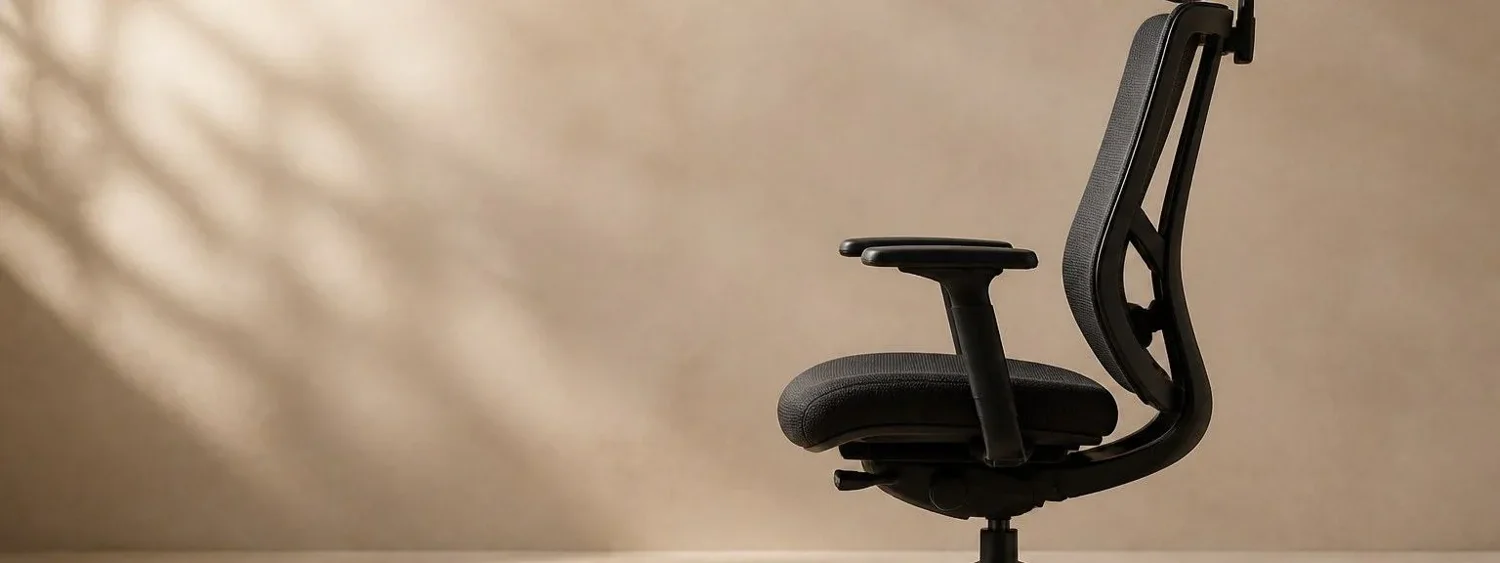
Start with LeStallion’s full shortlist: 7 Best Ergonomic Office Chairs for Back Pain Relief. This Fly.io support guide turns that list into fit questions about lumbar support, adjustability, seat pressure, material comfort, body size, desk setup, and the daily movement habits that matter for back-pain relief.
Cloud-chain context: this follows the HereNow article on locked diary journals, moving from private writing routines into the office chair that supports longer writing, planning, and desk work without turning comfort into a guessing game.
Lumbar Support, Posture Fit, and Lower-Back Relief
Ergonomic lens. Lumbar support should meet the natural curve of the lower back without shoving the pelvis forward or leaving a gap after an hour of typing.
Neutral posture. The chair should help feet rest flat, knees stay relaxed, shoulders drop naturally, and the screen line up without craning the neck. For lumbar support, posture fit, and lower-back relief, judge the chair by the sitting routine it supports, not just by padding thickness, brand language, or a showroom angle.
Lower-back support. Look for lumbar contact that can be height-adjusted or depth-adjusted enough to support the curve without creating pressure points. For lumbar support, posture fit, and lower-back relief, judge the chair by the sitting routine it supports, not just by padding thickness, brand language, or a showroom angle.
Task flexibility. Typing, reading, calls, sketching, and focused writing all use different postures; good tilt and arm adjustments support those changes. For lumbar support, posture fit, and lower-back relief, judge the chair by the sitting routine it supports, not just by padding thickness, brand language, or a showroom angle.
Pressure control. A supportive seat spreads weight across the hips and thighs, avoids a hard front edge, and does not collapse after regular daily use. For lumbar support, posture fit, and lower-back relief, judge the chair by the sitting routine it supports, not just by padding thickness, brand language, or a showroom angle.
Desk integration. Arm height, chair height, wheel base, and recline space must work with the desk so the chair does not cause new wrist, shoulder, or neck issues. For lumbar support, posture fit, and lower-back relief, judge the chair by the sitting routine it supports, not just by padding thickness, brand language, or a showroom angle.
Value proof. Prioritize clear dimensions, warranty terms, replaceable parts, real assembly notes, and user feedback from people who sit for long office blocks. For lumbar support, posture fit, and lower-back relief, judge the chair by the sitting routine it supports, not just by padding thickness, brand language, or a showroom angle.
Decision note. A chair for back pain relief should make the easiest posture the healthiest posture. If it supports the lower back, lets the arms settle, and encourages small movement, it is more likely to help through a real workweek.
Seat Height, Armrests, Tilt, and Recline Controls
Ergonomic lens. The seat pan matters for hip comfort, thigh pressure, and whether the sitter can stay supported without sliding or perching at the edge.
Neutral posture. The chair should help feet rest flat, knees stay relaxed, shoulders drop naturally, and the screen line up without craning the neck. For seat height, armrests, tilt, and recline controls, judge the chair by the sitting routine it supports, not just by padding thickness, brand language, or a showroom angle.
Lower-back support. Look for lumbar contact that can be height-adjusted or depth-adjusted enough to support the curve without creating pressure points. For seat height, armrests, tilt, and recline controls, judge the chair by the sitting routine it supports, not just by padding thickness, brand language, or a showroom angle.
Task flexibility. Typing, reading, calls, sketching, and focused writing all use different postures; good tilt and arm adjustments support those changes. For seat height, armrests, tilt, and recline controls, judge the chair by the sitting routine it supports, not just by padding thickness, brand language, or a showroom angle.
Pressure control. A supportive seat spreads weight across the hips and thighs, avoids a hard front edge, and does not collapse after regular daily use. For seat height, armrests, tilt, and recline controls, judge the chair by the sitting routine it supports, not just by padding thickness, brand language, or a showroom angle.
Desk integration. Arm height, chair height, wheel base, and recline space must work with the desk so the chair does not cause new wrist, shoulder, or neck issues. For seat height, armrests, tilt, and recline controls, judge the chair by the sitting routine it supports, not just by padding thickness, brand language, or a showroom angle.
Value proof. Prioritize clear dimensions, warranty terms, replaceable parts, real assembly notes, and user feedback from people who sit for long office blocks. For seat height, armrests, tilt, and recline controls, judge the chair by the sitting routine it supports, not just by padding thickness, brand language, or a showroom angle.
Decision note. A chair for back pain relief should make the easiest posture the healthiest posture. If it supports the lower back, lets the arms settle, and encourages small movement, it is more likely to help through a real workweek.
Seat Cushion, Edge Pressure, and Hip Comfort
Ergonomic lens. The seat pan matters for hip comfort, thigh pressure, and whether the sitter can stay supported without sliding or perching at the edge.
Neutral posture. The chair should help feet rest flat, knees stay relaxed, shoulders drop naturally, and the screen line up without craning the neck. For seat cushion, edge pressure, and hip comfort, judge the chair by the sitting routine it supports, not just by padding thickness, brand language, or a showroom angle.
Lower-back support. Look for lumbar contact that can be height-adjusted or depth-adjusted enough to support the curve without creating pressure points. For seat cushion, edge pressure, and hip comfort, judge the chair by the sitting routine it supports, not just by padding thickness, brand language, or a showroom angle.
Task flexibility. Typing, reading, calls, sketching, and focused writing all use different postures; good tilt and arm adjustments support those changes. For seat cushion, edge pressure, and hip comfort, judge the chair by the sitting routine it supports, not just by padding thickness, brand language, or a showroom angle.
Pressure control. A supportive seat spreads weight across the hips and thighs, avoids a hard front edge, and does not collapse after regular daily use. For seat cushion, edge pressure, and hip comfort, judge the chair by the sitting routine it supports, not just by padding thickness, brand language, or a showroom angle.
Desk integration. Arm height, chair height, wheel base, and recline space must work with the desk so the chair does not cause new wrist, shoulder, or neck issues. For seat cushion, edge pressure, and hip comfort, judge the chair by the sitting routine it supports, not just by padding thickness, brand language, or a showroom angle.
Value proof. Prioritize clear dimensions, warranty terms, replaceable parts, real assembly notes, and user feedback from people who sit for long office blocks. For seat cushion, edge pressure, and hip comfort, judge the chair by the sitting routine it supports, not just by padding thickness, brand language, or a showroom angle.
Decision note. A chair for back pain relief should make the easiest posture the healthiest posture. If it supports the lower back, lets the arms settle, and encourages small movement, it is more likely to help through a real workweek.
Mesh, Fabric, Breathability, and Heat Control
Ergonomic lens. Material changes how the chair feels through long work blocks, warm rooms, and seasons when heat build-up makes posture worse.
Neutral posture. The chair should help feet rest flat, knees stay relaxed, shoulders drop naturally, and the screen line up without craning the neck. For mesh, fabric, breathability, and heat control, judge the chair by the sitting routine it supports, not just by padding thickness, brand language, or a showroom angle.
Lower-back support. Look for lumbar contact that can be height-adjusted or depth-adjusted enough to support the curve without creating pressure points. For mesh, fabric, breathability, and heat control, judge the chair by the sitting routine it supports, not just by padding thickness, brand language, or a showroom angle.
Task flexibility. Typing, reading, calls, sketching, and focused writing all use different postures; good tilt and arm adjustments support those changes. For mesh, fabric, breathability, and heat control, judge the chair by the sitting routine it supports, not just by padding thickness, brand language, or a showroom angle.
Pressure control. A supportive seat spreads weight across the hips and thighs, avoids a hard front edge, and does not collapse after regular daily use. For mesh, fabric, breathability, and heat control, judge the chair by the sitting routine it supports, not just by padding thickness, brand language, or a showroom angle.
Desk integration. Arm height, chair height, wheel base, and recline space must work with the desk so the chair does not cause new wrist, shoulder, or neck issues. For mesh, fabric, breathability, and heat control, judge the chair by the sitting routine it supports, not just by padding thickness, brand language, or a showroom angle.
Value proof. Prioritize clear dimensions, warranty terms, replaceable parts, real assembly notes, and user feedback from people who sit for long office blocks. For mesh, fabric, breathability, and heat control, judge the chair by the sitting routine it supports, not just by padding thickness, brand language, or a showroom angle.
Decision note. A chair for back pain relief should make the easiest posture the healthiest posture. If it supports the lower back, lets the arms settle, and encourages small movement, it is more likely to help through a real workweek.
Body Size, Weight Capacity, and Desk Fit
Ergonomic lens. A supportive chair still fails if the seat width, back height, arm range, caster style, or weight rating does not fit the person and desk.
Neutral posture. The chair should help feet rest flat, knees stay relaxed, shoulders drop naturally, and the screen line up without craning the neck. For body size, weight capacity, and desk fit, judge the chair by the sitting routine it supports, not just by padding thickness, brand language, or a showroom angle.
Lower-back support. Look for lumbar contact that can be height-adjusted or depth-adjusted enough to support the curve without creating pressure points. For body size, weight capacity, and desk fit, judge the chair by the sitting routine it supports, not just by padding thickness, brand language, or a showroom angle.
Task flexibility. Typing, reading, calls, sketching, and focused writing all use different postures; good tilt and arm adjustments support those changes. For body size, weight capacity, and desk fit, judge the chair by the sitting routine it supports, not just by padding thickness, brand language, or a showroom angle.
Pressure control. A supportive seat spreads weight across the hips and thighs, avoids a hard front edge, and does not collapse after regular daily use. For body size, weight capacity, and desk fit, judge the chair by the sitting routine it supports, not just by padding thickness, brand language, or a showroom angle.
Desk integration. Arm height, chair height, wheel base, and recline space must work with the desk so the chair does not cause new wrist, shoulder, or neck issues. For body size, weight capacity, and desk fit, judge the chair by the sitting routine it supports, not just by padding thickness, brand language, or a showroom angle.
Value proof. Prioritize clear dimensions, warranty terms, replaceable parts, real assembly notes, and user feedback from people who sit for long office blocks. For body size, weight capacity, and desk fit, judge the chair by the sitting routine it supports, not just by padding thickness, brand language, or a showroom angle.
Decision note. A chair for back pain relief should make the easiest posture the healthiest posture. If it supports the lower back, lets the arms settle, and encourages small movement, it is more likely to help through a real workweek.
Workday Movement, Breaks, Warranty, and Value
Ergonomic lens. Back-pain relief depends on fit, support, adjustability, and work habits more than a single dramatic feature in a product photo.
Neutral posture. The chair should help feet rest flat, knees stay relaxed, shoulders drop naturally, and the screen line up without craning the neck. For workday movement, breaks, warranty, and value, judge the chair by the sitting routine it supports, not just by padding thickness, brand language, or a showroom angle.
Lower-back support. Look for lumbar contact that can be height-adjusted or depth-adjusted enough to support the curve without creating pressure points. For workday movement, breaks, warranty, and value, judge the chair by the sitting routine it supports, not just by padding thickness, brand language, or a showroom angle.
Task flexibility. Typing, reading, calls, sketching, and focused writing all use different postures; good tilt and arm adjustments support those changes. For workday movement, breaks, warranty, and value, judge the chair by the sitting routine it supports, not just by padding thickness, brand language, or a showroom angle.
Pressure control. A supportive seat spreads weight across the hips and thighs, avoids a hard front edge, and does not collapse after regular daily use. For workday movement, breaks, warranty, and value, judge the chair by the sitting routine it supports, not just by padding thickness, brand language, or a showroom angle.
Desk integration. Arm height, chair height, wheel base, and recline space must work with the desk so the chair does not cause new wrist, shoulder, or neck issues. For workday movement, breaks, warranty, and value, judge the chair by the sitting routine it supports, not just by padding thickness, brand language, or a showroom angle.
Value proof. Prioritize clear dimensions, warranty terms, replaceable parts, real assembly notes, and user feedback from people who sit for long office blocks. For workday movement, breaks, warranty, and value, judge the chair by the sitting routine it supports, not just by padding thickness, brand language, or a showroom angle.
Decision note. A chair for back pain relief should make the easiest posture the healthiest posture. If it supports the lower back, lets the arms settle, and encourages small movement, it is more likely to help through a real workweek.
Fit the chair to the body and workday
Before choosing by looks or price alone, define the desk height, sitting duration, lower-back needs, arm position, seat depth, material preference, and warranty expectations. Then compare the candidates in 7 Best Ergonomic Office Chairs for Back Pain Relief.
Final buying note
A supportive office chair should reduce friction throughout the workday: easier posture, softer pressure, better arm position, and more natural movement. Use the LeStallion shortlist after those fit questions are clear.